Category

Gardening Blog

Fall Lawn Revitalizing

By Gardening Blog

Fall Lawn Revitalizing Tips!

Laura from Garden Answer uses Himmel's favorite Espoma products!
Soil Test

Get a soil test done to ensure the health of your soil. New grass will grow best when the pH of the soil is 6.5-7.2. Apply amendments to correct the pH of your soil as needed.

Mow

Generally, mowing your lawn to 2.5-3” tall is best.

Dethatch

Remove dead plant matter. This will help your new seed to have contact with the soil.

Aerate

This puts holes into your lawn and helps circulate oxygen into your soil.

Apply starter fertilizer

This will give your new seed the nutrients it needs to survive. (There are fertilizers that contain low to no phosphorus if your soil has a healthy concentration of phosphorus)

Apply grass seed

We offer sun tolerant tall fescue blends as well as a blend specifically made for the shade. Ensure the best value by avoiding seed blends that have a high concentration of annual rye grass or weed seed in general.

Apply a cover to your grass seed

We offer straw. Covering your seed will help keep it in place as it grows. It will also deter animals from eating the seed.

Water your new seed

Water every day in the morning and evening (except when it rains) until your new grass is 3.5-4” tall or tall enough to mow. It is important that your lawn is watered evenly every time it receives hydration. Keeping your lawn tall (3.5-4”) will help deter weed seeds from sprouting as well.

Contact Himmel's today for a soil test and lawn treatment plan!

Landscaping@himmelsgardencenter.com

Himmel’s Supports Hunger Action Month 

By Gardening Blog
Himmel’s Mission is ‘Helping our neighbors build a better, healthier and more beautiful world’.
One way we do this is by supporting local nonprofits in their efforts to make a difference in the community. Himmel’s is proud of our partnership with the Anne Arundel County Food Bank whose Mission is ‘To fight hunger by assuring that all those in need, especially children, have access to food and other resources’.

September is Hunger Action Month, and Himmel’s participated as a passport location and food drive site. We also sponsored the Cruising Out Hunger event, which was a great time for a great cause! Join us in March for Nutrition Month events, or check out AAFoodBank.org/donate/ to learn more about how you can get involved!

A Beautiful Lawn – Year Round

By Gardening Blog

Year-Round Organic Soil Care For a Beautiful Lawn

Why should you integrate organics into your lawn feeding program? The benefits gained from the use of organics include improved disease and insect resistance, as well as improved heat and cold tolerance. Organic products will also improve your soil’s biology. The soil will become more permeable and alive, allowing water, air, and grass roots to penetrate the lawn soil more deeply and ultimately establishing a better foundation for grass to flourish. Organics are also safe for pets and children!

March

Espoma Lightning Lime
This product is a highly soluble form of calcium that helps to rapidly raise your soil’s pH, improving the health of your lawn by releasing trapped nutrients in the soil that feed the grass plants. We recommend that this only be applied as needed after a soil test has been completed.

Espoma Spring Lawn Booster
This product is specifically formulated to optimize the growth of your lawn, and provide 2.5 times more slow-release nitrogen (SRN) than conventional lawn programs.

May

Espoma All Season Lawn Food
Contains Bio-Tone Microbes that help make nutrients more available to your lawn. These microbes will help promote faster greening, deeper roots, and improved soil structure.

July

Espoma Summer Revitalizer
For use on all lawns including newly seeded and sodded areas. Contains 2% non-staining iron which helps turn a yellow lawn to green.

September

Espoma All Season Lawn Food

November

Espoma Fall Winterizer
Supplies long lasting nitrogen, an essential nutrient that helps to promote a thicker lawn and vigorous growth. It is also fortified with potassium, a nutrient that helps the lawn recover from summer drought conditions, enhances winter hardiness and helps promote a better spring greening the following season.

Contact Himmel’s today for a soil test and lawn treatment plan! landscaping@himmelsgardencenter.com

Summer Lawn Survival

By Gardening Blog

Is your lawn looking tired and worn down? Are you seeing more brown and yellow than green? You’re not alone. We can help you bring your lawn back to life even if it seems to have given up. Protecting your lawn from the extreme weather of summer is a challenge but it can be done. Our tips will help you maintain a lush, healthy lawn for you to enjoy and will increase overall curb appeal.

  • Sharpen your mower blades. This is very important, especially in the summer. Cutting with dull blades will cause grass blades to fray. Frayed blades of grass are more susceptible to browning and the development of fungal and other diseases, especially when combined with moisture from dew and rainfall.
  • Mow your lawn weekly, and don’t cut it too short. Keeping your lawn between 3 and 3.5” tall in the summer will encourage deep root development that will help inhibit weed growth. This will also make your lawn less dependent on water.
  • Mow at mid-morning, and only when the grass is dry. This time frame – after the morning dew dries and before the heat of the day sets in – allows sufficient time for the lawn to heal before dew sets in again at nightfall. Wet grass blades tend to bend, which is problematic when mowing, and as mentioned, frayed, or damaged blades of grass are susceptible to disease from moisture.
  • Water your lawn early in the morning, and not on mowing days. A tall fescue lawn requires 1” of water each week to thrive. When a fescue lawn doesn’t receive adequate amounts of water, it’s roots may be weakened. A weakened root system will lead to disease and damage.
  • Apply fertilizer to a freshly mowed, dry lawn every 5-6 weeks. Applying fertilizer to a wet lawn may prevent the nutrients from even distribution. Regarding fertilizer – N-P-K can be better understood when it is read as Up, Down, All-around. Nitrogen (N) promotes green growth (Up); Phosphorus (P) promotes root, fruit, and flower development (Down); Potassium (K) promotes disease and drought tolerance (All-around). We like Espoma Summer Revitalizer for summer lawn care, and other organic Espoma lawn fertilizers throughout the year. Note – Herbicides should not be applied this time of year.
  • Apply grub control treatments as needed. Grubs are pests that weaken and destroy the root system. We like milky spore because it only affects Japanese Beetle Grubs.
  • Treat pet stains in your lawn by deeply watering the affected area within 8 hours of contact.
  • Resist the urge to aerate, dethatch, or overseed your lawn in the summer. Those tasks are best done in the fall.

As always, feel free to contact the experts at Himmel’s Landscape and Garden Center to discuss your specific needs. Whether it’s bringing your tired lawn back to life, starting from scratch with sod, or going lawn-free altogether, we are here to assist! Contact Joey at 410-255-7730 or landscaping@himmelsgardencenter.com to schedule your free consultation today!

Monarch Butterfly Waystation

By Gardening Blog

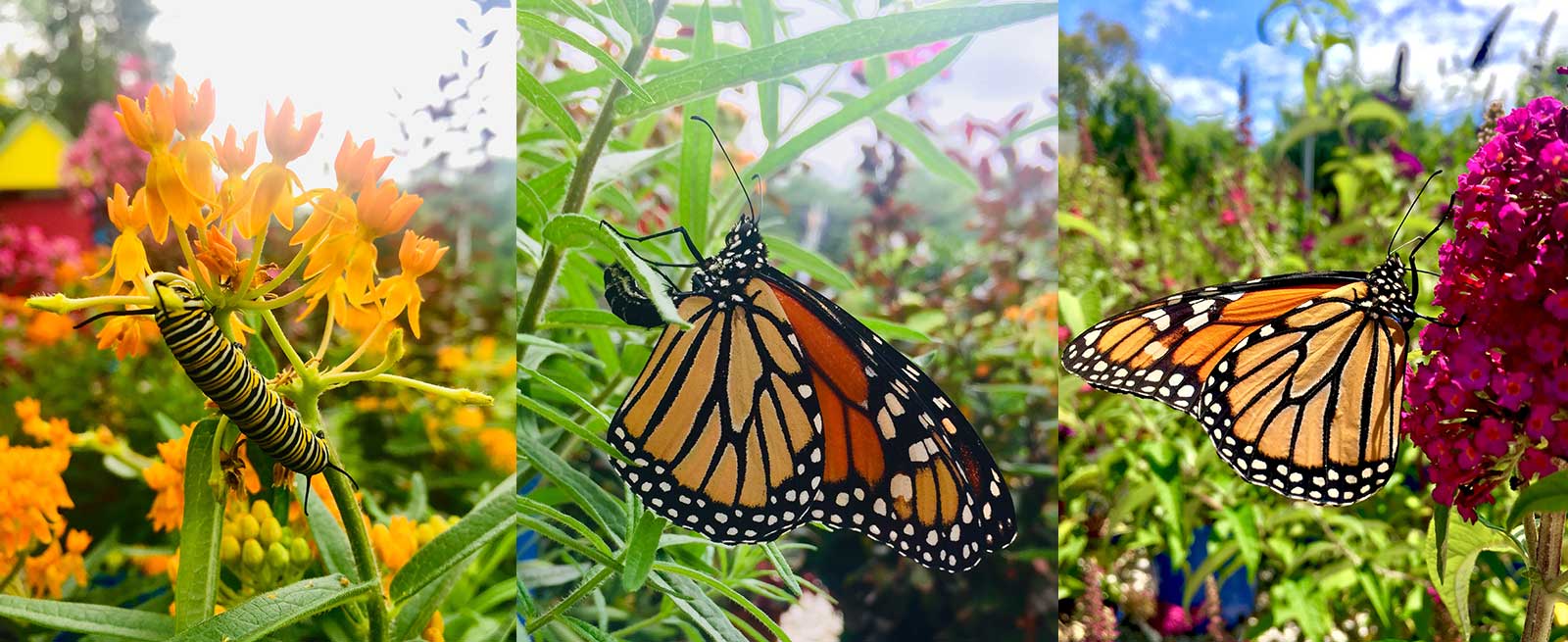
Nothing says summer quite like the activity of butterflies in the garden. With their majestic presence and humorous antics, they are a welcome site in the heat. By creating a Monarch Waystation, you could help one of most treasured butterflies.

Planning and installing a butterfly habitat is simple and rewarding. All you have to do is provide them with shelter, food, and water.

Monarch Waystations do have specific requirements for certification with monarchwatch.org. There isn’t a minimum size requirement, but we recommend that they be at least 100 square feet.

It is important that your waystation be installed in an area that receives full sun. Butterflies are most active in full sun.

To provide shelter, be sure that your plants are close together but not crowded. A good rule of thumb is to have your plants 12-18” apart throughout your waystation.

Monarch caterpillars rely on Milkweed Plants, they are their only food source before they become Monarch butterflies. Our team recommends that you plant at least 10 Milkweed Plants to give your Monarch butterflies the best chance of survival. If you offer the Monarchs the four milkweeds that are native to Maryland, we are sure that you’ll have success with creating their new habitat. The four native milkweeds are Asclepias incarnata (Swamp milkweed), Asclepias syriaca (Common milkweed), Asclepias tuberosa (Orange milkweed), and Asclepias verticillata (Whorled milkweed).

Planting a variety of nectar producing plants will serve as the food sources for the Monarchs once they become butterflies.Some favorite flowers of butterflies include Achillea (yarrow), Agastache (hyssop), Baptisia (false indigo), Conoclinium coelestinum (hardy ageratum), Coreopsis verticillata (threadeaf coreopsis), Echinacea (coneflower), Eryngium yuccifolium (rattlesnake master), Eutrochium maculatum (Joe Pye weed), Helenium autumnale (sneezeweed), Heleiopsis helianthoides (oxeye sunflower), Liatris spicata (blazing star), Monarda didyma (bergamot), Penstemon digitalis (beardtongue), Pycanthemum muticum (mountain mint), Rudbeckia fulgida (black-eyed susan), and Vernonia noveboracensis (New York ironweed).

Update from the Tanyard Springs Community’s Food Bank

By Gardening Blog

June 2022 Update:

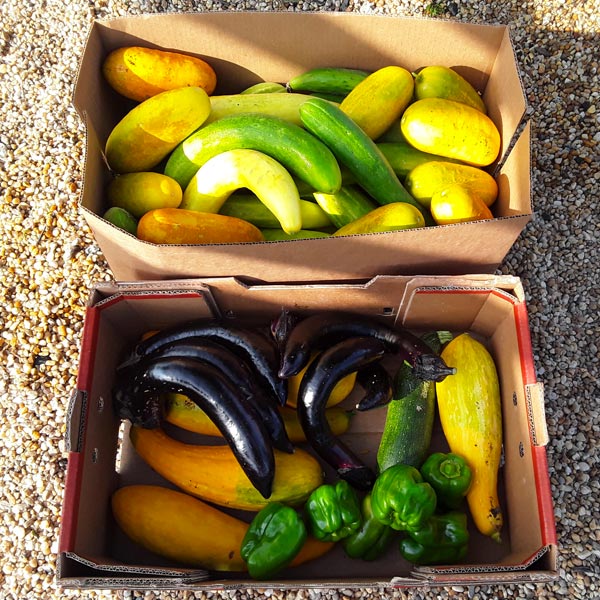
Today was the Community Garden Committee’s first harvest and food bank donation of the 2022 season – 76.5 pounds of cucumber, eggplant, squash and green peppers!

This was the largest single day’s harvest in the committee’s history.

Here is an update from the Tanyard Springs Community’s Food Bank:

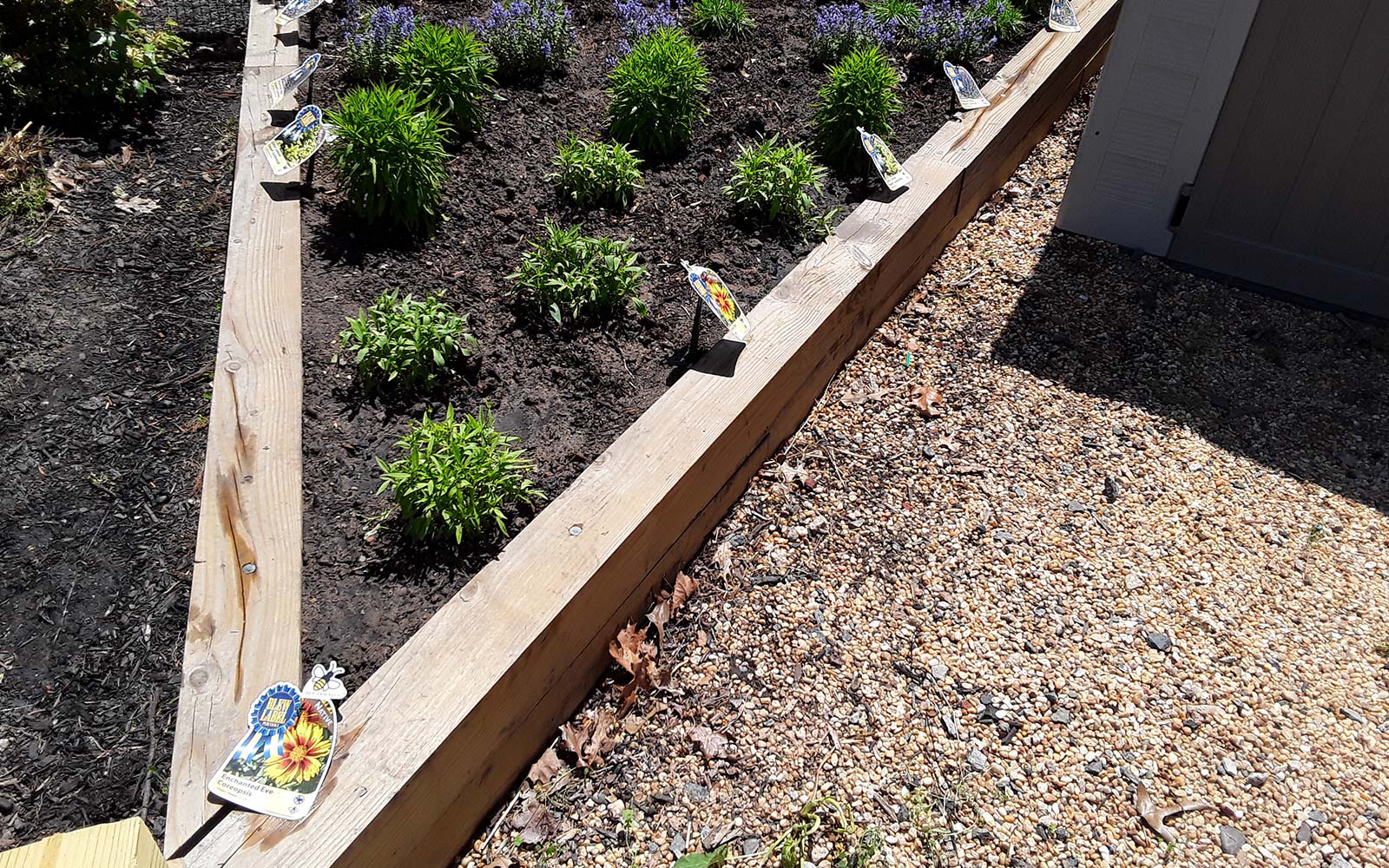
Thank you again for supporting the Tanyard Springs Community's Food Bank project again this year. I've attached some photos of the planted beds and our new pollinator bed, which I'm happy to report is already being checked out by at least a few bees. Our garden also includes berry bushes, sunflowers, a shared herb garden and a rose garden.

To date our Food Bank Project has donated nearly 250 pounds of fresh produce to local food banks. The support provided by Himmel's Landscape and Garden Center has been instrumental in our success. Lisa Winters pre-selected the plants for our order and other workers assisted in loading our plants at pickup time. We look forward to continuing our association with Himmel's as time goes on.

MichaelTanyard Springs Community's Food Bank

Espoma Organic Products

By Gardening Blog

At Himmel’s, we take pride in carrying products that are safe for our neighbors and for our planet. Plus, our goal is for our customers to find great joy – and success – in their gardening endeavors. That is why we love carrying a wide selection of Espoma Organic gardening products!

One of our favorite products is Espoma Biotone Starter Plus. This granular fertilizer contains both endo and ecto mycorrhizae, which are beneficial microbes that result in larger root mass and bigger blooms. Application of Biotone Starter Plus at planting time reduces transplant loss, and is recommended for use on trees, shrubs, flowers, herbs, and veggies.

For vegetable, herb and flower gardening, we recommend a top-dressing of Espoma’s Organic Mushroom Compost. This rich and beneficial compost improves poor soils, which helps plants flourish as they are nourished at the root. You can check out results in our raised bed gardens, featured in our ‘What’s in the Garden’ video series.

We especially love Espoma’s Garden Tone which does wonders for vegetable and fruit plants due to its perfect blend of important nutrients including: Nitrogen, Phosphate, Soluble Potash, Calcium, and Magnesium. The science behind this special combination guarantees bigger and more delicious vegetables!

At Himmel’s, we carry a large selection of rose bushes, from beautiful and floriferous knockout roses to fragrant, old-fashioned roses like those from grandma’s garden. Many of our neighbors ask us how to keep these gorgeous flowers blooming and healthy. We recommend Espoma Rose Tone, a slow-release granular fertilizer that can be used the entire growing season to encourage prize-winning blooms. To combat pesky Japanese beetles and rose slugs, or treat for powdery mildew or other fungal diseases, we recommend Espoma’s Organic Neem Oil. Neem oil is an all-natural and highly effective 3- in- 1 fungicide, miticide, and insecticide that works to kill eggs, larvae and adult insects which may cause damage and lead to other problems.

Whether it’s for your summer palms and tropicals, acid-loving rhododendrons and azaleas, blooming annuals and perennials, or to grow the biggest and juiciest tomatoes in town, Espoma has the perfect fertilizer to suit your gardening needs.

Some of the other organic products that we carry include Espoma’s:

  • Lawn Starter
  • Seed Starter
  • Potting Mix (in 3 different sizes)
  • Multi-use Fungicides
  • Assorted Insecticides
  • Liquid Plant and Cactus Food
  • Weed Preventer
  • Lawn food for every season
  • All-purpose Garden Soil
  • Veggie and Flower Garden Soil
  • Raised Bed Mix Soil

And many others!

Come in today and shop our large selection of plants and products. And if you want to learn more about Espoma’s great selection, visit their website, and check out their cool blog Garden Answer featuring the smart and savvy Laura LeBoutillier!